Aldar Begins Construction of Nebula Tower in Dubai
- Michael Ghobrial

- Jun 1, 2025
- 6 min read

Aldar Properties has commenced construction of the Nebula Tower, a landmark 90-storey mixed-use skyscraper on Dubai’s Sheikh Zayed Road. Designed as a high‑rise office tower with integrated hotel and branded residences, the development sits on one of the last undeveloped double plots adjacent to the DIFC. The building will offer around 88,000 m² of Grade-A leasable space, plus premium hospitality and residential amenities. Key facts about the project include:
Height & Size: ~351 metres tall, 90 floors, ~88,000 m² net lettable area.
Use Mix: Prime office tower complemented by a luxury boutique hotel and branded residences.
Timeline: Construction starts in mid-2025, with completion targeted for Q4 2027.
Investment: Part of an AED 1.8 billion strategic investment in Dubai (including other assets).
Location: Sheikh Zayed Road (freehold), walking distance to Emirates Towers Metro and DIFC, offering best-in-class connectivity.
These parameters position Nebula Tower as a high-profile, strategically-located office development in a city with record-high office occupancy (~92% citywide) and rapidly rising rents.
Architectural Design and Engineering
Nebula Tower’s architecture is expected to be striking and complex. Although the final aesthetic details have not been publicly released, project renderings suggest a modern, dynamic form that may feature curvilinear or faceted facades. The tower’s height and mixed-use podium will require an advanced structural system. Engineers will likely employ a high-strength reinforced concrete core – possibly with perimeter mega-columns and outrigger trusses – to resist wind and seismic forces at 351 m elevation. Computer‑aided parametric modelling and digital BIM processes will be used to ensure precision in geometry and integration of MEP and façade systems. The design approach will target high sustainability standards (such as LEED or Estidama), with energy-efficient glazing, shading devices and possibly double‑skin curtain walls to minimise solar heat gain. Internal features, such as double-height lobbies, sky gardens, or mechanical skybridges, may be incorporated to enhance architectural interest and tenant amenities, adding structural complexity. At the design stage, specialists, including international architects, structural engineers (for example, global firms like Werner Sobek are reported to have been involved) and façade consultants have contributed to the concept. These teams will deliver detailed design drawings, specify materials and drive the integration of building services into the supertall structure.
Construction Methods and Sequencing
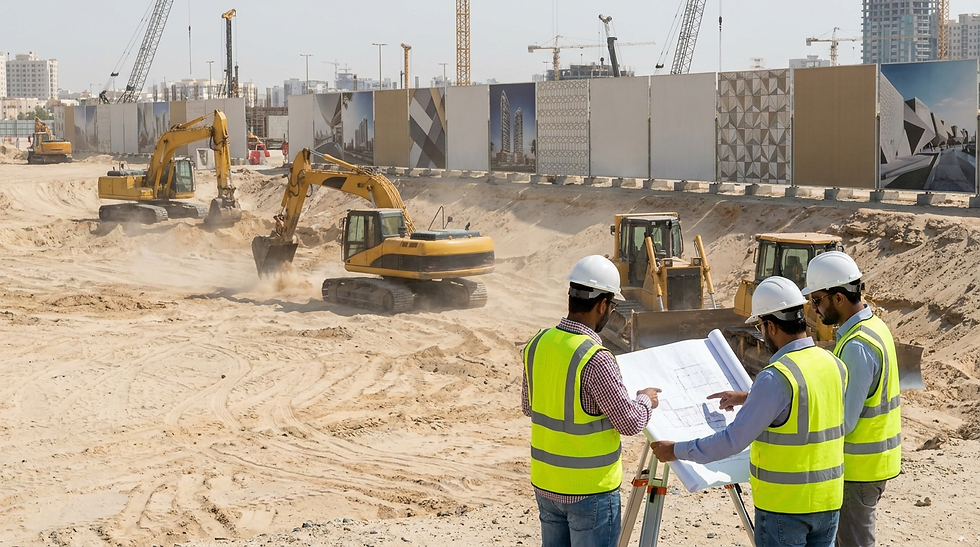
The construction of a 90-storey tower will proceed with a carefully planned sequence. Early works will involve deep foundations – likely a piled raft or large-diameter bored piles – to support the tower’s immense loads. A reinforced concrete raft and pile system will be required, given the height and soil conditions, with ground improvement where needed. Core construction will use a slipform or jump-form system to build up the central concrete spine floor-by-floor efficiently. A cast-in-place concrete floor system (possibly flat slab or waffle slab) will tie into the core and columns. High-strength concrete mixes will be used, possibly pumped from ground-level batching plants.
As the core rises, structural steel outriggers or belt trusses may be installed at strategic levels to transfer loads between core and perimeter columns. The façade substructure can be fixed continuously to the concrete structure, with waterproofing and insulation integrated during erection. Tower cranes will be stationed on the superstructure, with external climbing cranes installed on the core to hoist materials. Modern safety and monitoring techniques (crane anti-collision systems, real-time surveying, 3D laser scans) will ensure precision alignment of the frame. The construction team must sequence vertical construction (core and columns), horizontal slabs, and external cladding simultaneously to meet the tight schedule. Stringent quality control (concrete strength testing, alignment checks) and safety protocols (wind limits for lifts, perimeter netting) will be enforced throughout.
Materials, Façade and Building Systems
Nebula Tower will use premium construction materials. The primary structure will consist of high-strength reinforced concrete and structural steel; key elements will be engineered for durability and fire safety. The façade is expected to be a high-performance curtain wall system, likely comprising double-glazed, coated glass panels set in aluminium or steel framing. Given Dubai’s climate, the façade design will incorporate solar shading (horizontal/vertical fins or fritted glass) to reduce cooling loads. Specialist façade contractors (with expertise in bespoke high-rise cladding) will fabricate unitised panels in factory conditions for quality and then install them onto the building frame.
Internally, the fit-out for luxury offices, hotel rooms and residences will use top-tier finishes (marble, stone, engineered wood, high-end millwork) and systems. MEP services will include an efficient central chilled-water air-conditioning plant, with variable air volume air-handlers distributing conditioned air. Smart building management systems (BMS) will optimise energy use for HVAC, lighting and elevators. Mechanical floors will be interspersed to house large equipment (chillers, pumps, switchgear). Fire and life-safety systems – such as pressurised stairwells, sprinkler networks and refuge floors – will comply with international high-rise codes. Vertical transportation will feature high-speed double-deck elevators (served by sky lobbies), and service elevators sized for MEP equipment. In summary, the building fabric and systems will use state-of-the-art products to achieve sustainability targets, reduce operational costs and meet the comfort expectations of premium tenants.
Construction Schedule and Phasing
Construction is expected to progress over roughly 2½ to 3 years. The ground and basement excavation will commence first (Q2 2025) and take several months to complete before foundation works. Once foundation elements and the concrete raft are in place (possibly by the end of 2025), superstructure erection will begin in earnest. The core and columns will typically rise floor-by-floor; assuming a 7–10 day cycle per floor, the full height could be topped out by mid- to late-2027.
Concurrently, lower floors and podium levels will be finished with steel and slab work. As the structure goes up, façade installation will start from the bottom, working upward behind the lifting crews. By 2027, the external cladding and major MEP systems should be nearing completion. After structural completion, extensive interior fit-out will be required for offices, hotel and apartments – this final phase will run in 2027 up to handover in Q4 2027.
Throughout, a detailed master schedule and fast-track techniques will be used to meet the Q4 2027 deadline, coordinating hundreds of subcontractors and suppliers. The developer and contractor will work under strict milestones (foundation, frame level 20, 40, 60, etc.) to ensure alignment with project financing and lease commitments.
Delivery Team and Consultants
This large-scale project involves many specialised partners. Principal stakeholders and service providers will include:
Developer: Aldar Properties PJSC (Abu Dhabi), leading project financing and management.
Architecture & Design: A lead architectural firm (yet to be announced) responsible for the building design and aesthetic.
Structural Engineering: High-rise structural engineers (a firm such as Werner Sobek or similar) to design the reinforced core, frame and outriggers for wind and seismic resistance.
MEP Engineering: Mechanical, electrical and plumbing engineering consultants to design the HVAC, electrical distribution, plumbing, fire protection and IT systems.
Façade Contractor: A specialist contractor/consultant for the curtain wall system (materials, thermal performance and installation).
Main Contractor: A global construction company or joint venture will be appointed to carry out the build (civil works, concrete formwork, and overall coordination).
Subcontractors: Various specialists (concrete subcontractor, steel fabricators, glazing installers, interior fit-out teams, elevator and escalator suppliers, etc.) working under the main contractor.
Project Management / QS / Commissioning: Independent project managers, quantity surveyors and commissioning agents to oversee cost control, scheduling and handover.
Aldar has not publicly confirmed the names, but a project of this scale will involve a consortium of international and local firms with proven track records in supertall construction. Each partner will handle detailed design and execution in their area of expertise, all integrated through BIM coordination.
Commercial Context and Market
The Nebula Tower is positioned to capitalise on Dubai’s booming office market. With city-wide office occupancy above 92% and Grade-A rents rising over 20% per year, demand for new prime office space is very strong. Sheikh Zayed Road is one of the city’s most prestigious business corridors; adding a modern, high-quality tower there will attract blue‑chip tenants in finance, technology and international trade. The tower’s mixed-use format – combining corporate workspace with a hotel and luxury residences – also provides diversified income streams, enhancing overall project returns.
As a freehold development, Nebula Tower is expected to appeal to foreign investors and multinational companies seeking visa-linked real estate in Dubai. Aldar’s investment of ~AED 1.8 billion (including associated acquisitions) reflects confidence that the project will deliver robust returns. Given the limited upcoming supply of comparable office towers in Dubai and long-term lease contracts typical for Grade A space, the project’s potential ROI is strong.
Furthermore, Aldar’s choice of a highly connected location (walking distance to Metro and next to DIFC) targets the premium end of the market. In summary, Nebula Tower is timed to serve the continued shortage of Grade A space in Dubai, giving confidence to stakeholders that the development will be fully leased by opening and commanding top market rents for years to come.